Cruises to Italy: Routes, Ports and Land Days That Work Together
Plan an Italy cruise around the places you want to see. Compare routes, real departure ports, land stays, touring pace and total trip costs.
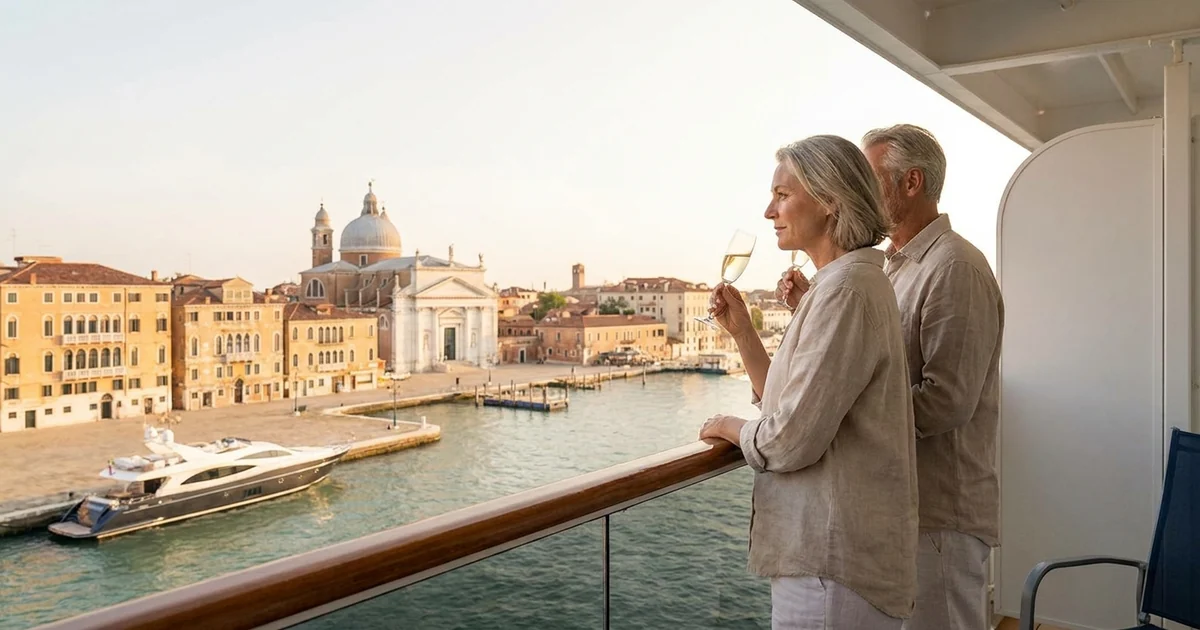
The best cruise to Italy starts with the places you want to experience, then works backward to the ship. A sailing labeled “Italy and the Mediterranean” might give you one Italian port day. A call advertised as Rome lands you in Civitavecchia. And a cruise sold with Venice in its name may require a separate journey to Ravenna or Trieste.
Before comparing suites, count your usable days in Italy. Then decide which places deserve a hotel stay, which work as port visits, and how much travel you want between them.
Start With the Departure Port, Not Just the Destination Name
| Your booking says | What to plan before buying flights |
|---|---|
| Rome / Civitavecchia | Separate airport, Rome hotel and ship transfers; the city and port are different places |
| Venice / Ravenna | A journey to Porto Corsini; compare Bologna and Venice airports |
| Venice / Trieste | A separate departure city; decide whether Venice deserves its own hotel nights |
| Venice / Marghera, Fusina or Chioggia | The exact passenger check-in point, which may differ from the ship’s berth |
For a first Rome visit, compare three pre-cruise nights with a shorter arrival stop. Three nights can give you two full sightseeing days between arrival and boarding. Our Rome to Civitavecchia cruise planning guide compares hotel bases, private transfers, cruise-line transfers and rail.
For the Adriatic, do not book a “Venice hotel” until you know the departure port. Our Venice, Ravenna and Trieste cruise port guide connects the airport, hotel and transfer decisions. Ravenna’s cruise terminal is at Porto Corsini, with indicative airport transfer times of about 90 minutes from Bologna and 2½–3 hours from Venice Marco Polo, depending on transport. These are travel estimates, not flight-to-boarding allowances.
Port and transport information reviewed September 16, 2026; confirm the instructions for your specific sailing.
Quick Answer Best Cruises to Italy by Traveler Type
| Traveler type | Best Italy cruise style | What to watch |
|---|---|---|
| First-time Italy visitors | Western Mediterranean with Rome, Naples, and Florence/Pisa ports | Port cities are far from the headline sights, so transfers matter. |
| Seniors or mobility-conscious travelers | Premium or small-ship itinerary with fewer tender ports | Avoid overpacked port days and long coach rides every morning. |
| Families | Big ship from Rome or Barcelona with Italy and Greek Isles | Choose the ship for kids, then count the actual Italy port days. |
| Food and wine travelers | Small ship or luxury line with late stays and strong excursions | A short port call rarely gives enough time for inland wine regions. |
| Italy-focused travelers | Land plus cruise hybrid | Add hotel nights before or after so Italy is not reduced to day trips. |
Is a Cruise the Best Way to See Italy?
A cruise works well when you enjoy the ship and want several coastal destinations without changing hotels. A land trip works better when evenings in Rome, Tuscan countryside stays or several days in one region are the reason you are going.
If you’re still deciding whether a cruise or a land trip is better, or which cruise to choose, schedule a call with us and we’ll help you plan your perfect Italy vacation.
Cruises vs. Land Travel in Italy: Side-by-Side Comparison
Cruise vs Land in 7–10 Days
| Factor | Cruises to Italy | Land Travel in Italy |
|---|---|---|
| Flexibility | Low–medium (fixed schedule, fixed ports) | High (you set pace, destinations, timing) |
| Depth of local experience | Medium (daytime focus, fewer evenings ashore) | High (evenings, neighborhoods, local dining) |
| Ease of planning | High (one booking covers many logistics) | Medium–low (trains, hotels, tickets, routing) |
| Cost predictability | High–medium (fare fixed; extras add up) | Medium (more variables but controllable) |
| Mobility considerations | Fewer hotel changes; shore access still needs checking | Hotel access, trains, cobblestones and hills need planning |
| # of destinations in 7–10d | High (3–6 ports in several countries) | Medium (2–3 regions in one country) |
How this plays out in real life:
-
A 7-night Italy & Greek Isles cruise might give you:
- 2–3 days in Italian ports (e.g., Rome/Civitavecchia, Naples, Florence/Livorno)
- 2–3 days in Greece (e.g., Santorini, Mykonos)
- 1–2 sea days
-
A 10-day land trip might give you:
- 3–4 nights Rome
- 3 nights Florence/Tuscany
- 3 nights Venice
You rack up more cities on a cruise. You get less actual time in each one.
When a Cruise to Italy Makes the Most Sense
I recommend an Italy cruise if:
- You have limited vacation days and want a multi-country tour (Italy, France, Spain, Greece) without juggling hotel changes, rail schedules, and rental car rules.
- You’re traveling with older adults or anyone with mobility issues and you want elevators, predictable cabins, and no suitcase shuffling every 48 hours.
- You get anxious about logistics like train strikes, ticket apps, ZTL driving zones, and parking regulations in medieval towns.
- You like a fixed budget framework: a known cruise fare and a manageable list of extras.
- You actually enjoy the ship: shows, lounges, structured kids’ clubs, buffet breakfasts at 7:00 without hunting for a café.
Example scenario:
Two grandparents plus a grandchild want Italy but tense up at the idea of hauling luggage through Termini Station and dragging strollers over uneven stone. A 7-night Western Mediterranean itinerary with Rome and Naples plus one or two sea days usually saves everyone’s sanity.
When You Should Consider Land or a Hybrid Trip
Expect to be disappointed by a cruise if:
- You want slow travel in Tuscany, Puglia, or hillside villages where life moves at walking speed.
- Crowds and fixed schedules wear you down; cruise port days can be crowded depending on the cruise line.
- You’re focused on wine and food regions like Chianti, Barolo, or Umbria that sit well inland, far from cruise ports.
In that case, a hybrid setup usually wins:
- 2–3 nights in Rome for evening walks in Trastevere and unhurried Vatican/Colosseum visits.
- 7-night Italy-focused or Western Mediterranean cruise (Rome, Naples/Amalfi, Florence/Pisa plus France/Spain).
- 2–3 nights in Florence or Venice afterward.
You still leverage the ease of a cruise but buy yourself real nights on Italian streets instead of watching the coast from Deck 12.
Types of Italy Cruise Itineraries (And What You Actually See)
Some of those glossy brochures only give you one Italian day buried in a “Mediterranean” label. Before you hand over your card, count how many days you actually stand on Italian pavement.
Common Italy Cruise Regions Explained
Most Italy-inclusive Mediterranean cruise itineraries fall into four broad regions:
-
Western Mediterranean
- Typical Italian ports: Civitavecchia (for Rome), Naples, Livorno or La Spezia (for Florence/Pisa/Cinque Terre), sometimes Genoa or La Spezia for Portofino/Cinque Terre.
- Often combined with: French Riviera (Marseille, Nice/Villefranche), Spanish ports (Barcelona, Palma).
-
Adriatic & Venice Region
- Ports: Trieste, Ravenna, Ancona, and calls like Kotor (Montenegro), Dubrovnik (Croatia), Split.
- Some sailings marketed with Venice use Trieste or Ravenna. Other sailings use Venice’s own terminal arrangements. Check the port and passenger check-in instructions rather than assuming every ship uses the same location.
-
Southern Italy & Sicily
- Ports: Palermo, Messina, Catania, Bari, Brindisi, Cagliari (Sardinia), sometimes Naples.
- Often combined with: Greek Isles, Malta, or Eastern Mediterranean routes.
-
Italy & Greek Isles Combinations
- Usually 2–3 Italian ports plus Greek islands (Santorini, Mykonos, Corfu, Rhodes) and sometimes Turkey (Kuşadası for Ephesus).
If Italy sits at the top of your list, do not blindly accept an itinerary that says “Italy & Greek Isles” and gives you 2 Italian days out of 9. Pull up the port list and count.
Typical Itinerary Patterns (7–14 Nights)
Table 1: Sample Italy Cruise Itineraries (2026-2027 Patterns)
| Itinerary Type | Nights | Italian Ports (Typical) | Other Ports (Typical) | Best For |
|---|---|---|---|---|
| Western Med Sampler | 7 | Civitavecchia (Rome), Naples, Livorno/La Spezia | Barcelona, Marseille, Palma | First-time Europe, families, older travelers |
| Italy & Greek Isles | 7–9 | Civitavecchia, Naples or Messina | Santorini, Mykonos, Athens, possibly Turkey | Bucket-list mix of Italy + Greece |
| Adriatic & “Venice” | 7–10 | Trieste or Ravenna, Bari, maybe Ancona | Kotor, Dubrovnik, Split, sometimes Corfu | Travelers focused on Adriatic coast & Venice |
| Southern Italy & Sicily | 7–10 | Palermo, Messina, Catania, Bari/Brindisi | Malta, Greek Isles | Repeat Italy visitors, culture & scenery mix |
| Grand Mediterranean | 12–14 | 4–6 Italian ports across all regions | Spain, France, Greece, sometimes Turkey | Travelers with time for a longer in-depth trip |
Most 7-night Western Mediterranean cruises to Italy give you 2–3 Italian port days. Stretch to a 12–14 night “Grand” itinerary and you can hit 4–6 Italian ports, but you also pay for every one of those days.
How Much Time Do You Really Get in Each Port?
The published port window is not all sightseeing time. Work backward from the all-aboard deadline, allowing for disembarkation, transport both ways, connections and a return buffer. Tender operations may add another step.
| Cruise port | Destination decision | What to compare |
|---|---|---|
| Civitavecchia | One main Rome sightseeing area, or a local outing | Full door-to-door transfer and time actually in Rome |
| Livorno | Florence, Pisa, Lucca or another focused outing | The excursion from this port, rather than a generic Florence transfer estimate |
| La Spezia | Cinque Terre, a city excursion or local sightseeing | Actual transport connections and return options |
| Naples | Naples itself, Pompeii or a coastal excursion | Choose one main objective before adding more stops |
| Trieste or Ravenna | Local sightseeing or a separate Venice land stay | Whether the complete journey leaves enough worthwhile time in Venice |
A private driver can reduce changes of transport; it cannot remove road delays or change the ship’s departure time. If an independent outing only succeeds when every connection works perfectly, simplify the day.
Best Time of Year for Cruises to Italy
For sightseeing-focused trips, we usually start by comparing spring and autumn dates with peak summer. This is a planning preference, not a promise of mild weather, lower fares or empty ports. The route matters: Venice and Sicily do not share one uniform climate.
Month-by-Month Overview
| Travel window | Why consider it | What to weigh |
|---|---|---|
| Spring | A starting point for walking and cultural touring | Variable weather and whether swimming is important |
| Summer | Often fits school holidays and family schedules | Build shade, breaks and shorter outings into the plan |
| Autumn | Worth comparing for city visits and land extensions | Daylight, the exact sailing schedule and weather flexibility |
| Winter | May suit a city-led trip paired with an available sailing | Verify that the route and shore experiences you want operate |
Choose the season around the activities that matter to you. A sightseeing-focused trip and a swimming-focused trip may need different dates; no month guarantees warm water, calm seas or comfortable touring weather.
If you are looking at July or August, use my Mediterranean cruise heat strategy before you choose shore excursions. The ship may be comfortable, but Rome, Florence, Pompeii, Athens, and Santorini still need a heat-aware plan.
Best Time by Traveler Type
-
Families with school-age children
- Realistically, your window is late June through August.
- Compare the actual route and daily touring plan; no summer week reliably avoids heat waves.
- Pick ships with real shade around pools and proper kids’ clubs, not just one slide.
-
Couples and honeymooners
- Target May, early June, or September.
- Warm days, cooler nights, and cities that still feel alive without crush-level tourism.
- Solid window for luxury Italy cruises and small-ship itineraries where you want time on shore, not hiding in air conditioning.
-
Seniors or anyone heat-sensitive
- I strongly recommend late April–May or late September–October.
- Do not underestimate steep climbs, stairs, and stone streets in 35°C+ (95°F+) heat in places like Rome or Florence. That combination sends people back to the ship early.
Choosing the Right Cruise Line and Ship for Italy
Itinerary is only half the equation. The wrong ship in the wrong month, and you spend port days waiting in stairwells to disembark or fighting for shade by the pool.
Cruise Lines That Sail to Italy (By Travel Style)
Table 3: Cruise Line Segments for Italy (Typical 2026-2027 Positioning)
| Segment | Example Lines | Typical Vibe | Pros for Italy | Cons for Italy |
|---|---|---|---|---|
| Mainstream / family-oriented | MSC, Royal Caribbean, Norwegian | Larger ships with varied entertainment | Compare family facilities and the exact fare | Busy port days and extra-cost options can affect the trip |
| Premium | Celebrity, Princess, Holland America | Different balances of dining, entertainment and destination time | Compare the actual ship and itinerary | A brand label does not guarantee a particular passenger mix or pace |
| Luxury and smaller-ship options | Regent, Seabourn, Silversea, Ponant, SeaDream; also compare Viking Ocean | Different levels of inclusions and onboard service | Potentially a good fit for travelers prioritizing quieter ships | Check ship size, tendering, excursion costs and fare terms individually |
For family cruises to Italy, mainstream lines tend to hit the mark: water slides and kids’ programs for them, a tolerable bill for you. For couples and older travelers who care more about time in port than the rock-climbing wall, small-ship lines often justify the extra money.
Big Ship vs Small Ship in Italian Ports
Big ships (3,000–6,000+ guests)
- Pros:
- Multiple pools, kids’ clubs, entertainment venues, and casual dining options.
- Strong pricing in shoulder seasons, good promotions for families.
- Plenty of choice for dining hours and styles.
- Cons:
- Longer lines to get off the ship in popular ports, especially when tender boats are involved.
- Restricted from some smaller ports and charming harbors.
- When three big ships hit a small town on the same morning, the streets feel like a festival you never asked for.
Small ships (typically under 1,000 guests)
- Pros:
- Access to smaller harbors like Portofino and certain Sicilian towns.
- Quicker off the gangway; more of your day spent in the destination, not in a queue.
- Often more late-night or overnight calls, which completely changes how you experience places like Venice.
- Cons:
- Higher nightly cost, even if drinks and gratuities are included.
- Limited kid infrastructure: no mega water parks or huge teen lounges.
- Fewer cabins, so prime dates vanish quickly.
Onboard Experience Considerations for Italy
When comparing ships for an Italy run, do not just stare at the brochure photos. Look for:
- Shade and pool design: In July–August, adequate shaded seating matters more than the number of pools.
- Air conditioning performance: Most modern ships cope well, but older or bargain-basement hardware can feel warm in hallways and common areas during heat waves.
- Dining flexibility: Italy port days can be long. Flexible or anytime dining works better than rigid early/late sittings if you are staggering back from Florence at 19:30.
- Passenger mix:
- MSC and Costa skew more European/Italian: late dining, announcements in several languages, and a different rhythm to evenings.
- North American–oriented lines front-load earlier dining, English announcements, and a service style familiar to US and Canadian travelers.
My personal favorite is a small ship cruise to Italy. You experience more and have a more relaxed trip.
Budgeting for Cruises to Italy (What It Really Costs)
Sticker price is only the first layer. Italy ports, long transfers, and “just one more” excursion add up quickly if you are not watching.
What’s Included vs Extra
Typically included:
- Cabin
- Main dining room and buffet meals
- Basic coffee, tea, some juices at meal times
- Standard entertainment (shows, music, trivia, etc.)
- Kids’ club access on family-friendly lines
Common extras:
- Gratuities / service charges: Check the amount and whether your booked fare includes them.
- Drinks: Alcohol, sodas, bottled water, and specialty coffees unless you buy a drinks package.
- Specialty dining venues: Check which restaurants and reservations your fare covers.
- Wi-Fi: Compare included access, device limits and any package you would actually buy.
- Shore excursions: Price the specific excursions you want, including private or smaller-group options.
- Port-to-city transfers: Shuttles, taxis, private cars, or train tickets.
Hidden or Overlooked Costs Specific to Italy
Italy hits you with distance costs. The ports sit far from the posters you saw of Trevi Fountain and the Duomo.
| Budget item | What the quote should specify |
|---|---|
| Rome and Civitavecchia transport | Airport, hotel and terminal pickup/drop-off; luggage capacity and assistance |
| Florence or Pisa day | The complete excursion from your actual port, entrance reservations and time at the destination |
| Naples, the coast or Capri | Your chosen outing, transport, inclusions and cancellation terms |
| Hotels before or after sailing | Nights, room type, breakfast and any local charges |
| Trip protection | Coverage and exclusions appropriate to your full itinerary |
Compare totals for the same travelers, cabin standard, land nights and touring plan. For private transport, ask whether the quote reaches an authorized terminal drop-off or ends at a public meeting point. In Venice, identify who handles bags between hotel, boat and road vehicle. These details can explain why two similar-looking quotes differ.
Packing for an Italy Cruise
- Church dress codes:
- Shoulders covered; knees covered in major churches like the Vatican and several in Florence.
- A thin scarf or shawl in your day bag solves most issues.
- Heat and sun:
- High-SPF sunscreen, wide-brimmed hat or cap, and decent sunglasses.
- Light, breathable fabrics you can sweat in without misery.
- Footwear:
- Break in supportive walking shoes or sandals with good grip before the trip. Cobblestones ruin cheap soles.
- Tech:
- Portable battery pack, offline maps downloaded in advance, small daypack.
- Do not rely entirely on ship Wi-Fi; speeds and reliability vary, and signals often drop in port.
Avoiding Common Mistakes First-Time Italy Cruisers Make
- Scheduling intense excursions in every single port. Build at least one lighter day or sea day for recovery.
- Ignoring transfer times from port to inland cities. Two hours each way kills your “10 hours in port” fantasy.
- Skipping advance reservations for Vatican, Colosseum, or Uffizi, then spending most of the day in a queue.
- Booking “Italy & Greek Isles” when what you actually want is Italy-heavy and learning too late that you only have 2 Italian days.
- Underestimating gratuities, transfers, excursions, and Wi-Fi in their total budget, then feeling nickel-and-dimed onboard.
- Dragging older relatives or young kids on long walking tours in August during peak afternoon heat. That is how you end up hunting for shade instead of sights.
FAQs About Cruises to Italy
How many days do you need for a cruise to Italy?
Start with the cruise length, then add arrival and sightseeing nights separately. A seven-night cruise with three pre-cruise hotel nights gives you a different experience from arriving the day before and leaving immediately afterward. Count full usable sightseeing days, not just calendar dates.
Can you see Rome in a day from Civitavecchia?
You can plan a focused visit if the port hours and transport allow it. Choose one principal sightseeing area. For a first visit with several major sights, add Rome hotel nights before or after the cruise.
What should you check before buying flights?
Confirm the actual departure and arrival ports, passenger check-in instructions, cruise-line flight guidance and any planned hotel nights. A city in the cruise title may be far from the terminal.
Are excursions worth it or can you explore ports on your own?
For a long inland journey, compare a ship excursion with a vetted private tour and an independent plan. Include the entire return journey, walking requirements and contingency time. A simpler local outing may be better than a rushed day at a distant destination.
Is an Italy river cruise the same as a coastal cruise?
No. A Venice-focused river or lagoon itinerary does not sail between Rome, Florence and the Amalfi Coast. Choose it for Venice and its region, then add other cities by land.
Our Italy river cruise guide explains the tradeoffs.
Are Italy cruises good for kids?
They can work well when the ship facilities and shore plans fit the children traveling. Compare family cabins, age-appropriate activities and walking requirements. Mix longer sightseeing days with easier outings rather than booking an intensive tour in every port.
Can you add time in Italy before or after your cruise?
Yes. Plan arrival before embarkation day when possible, then add hotel nights for the places you want to explore in depth. Choose the land stay around the actual departure or arrival port and allow time for the connecting journey.
Plan your Italy Trip with Us
Let us help you plan the perfect Italy trip whether you want land, coastal cruise, a river cruise or a combination!
Book a complimentary Italy cruise planning consultation and bring your preferred dates, total trip budget, must-see places and walking or transfer needs.