River Cruise vs Ocean Cruise: Compare 5 Deciding Factors
River cruise vs ocean cruise: compare pace, ship size, destination access, motion, and inclusions to choose the trip that fits how you want to travel.
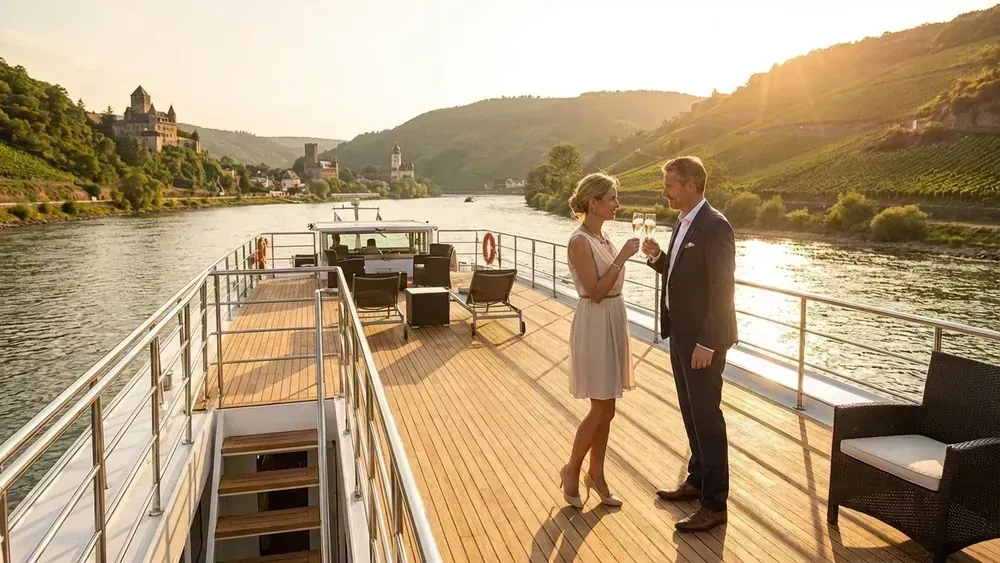
A river cruise vs ocean cruise choice comes down to five differences: pace, ship size, destination access, motion, and inclusions. Choose a river cruise if you want a smaller ship, calmer water, guided cultural touring, and direct access to inland towns. Choose an ocean cruise if you want more restaurants and entertainment, sea days, and access to islands, coastlines, and long-distance routes.
In my experience, the decision needs more care for couples celebrating something special, retirees planning a long-awaited trip, and families balancing several ages and interests. Start with how you want each day to feel, then compare the exact itinerary, ship, and quote.
River cruise vs ocean cruise summary
| Deciding factor | River cruise | Ocean cruise |
|---|---|---|
| Pace | Port-intensive days built around touring and scenic sailing | Port days mixed with sea days and more time aboard |
| Ship size | Smaller ships, fewer passengers, and fewer venues | From refined small vessels to large resort ships with extensive amenities |
| Destination access | Inland waterways and walk-off access when the berth is near a historic town | Islands, coastlines, fjords, expedition regions, and long-distance routes |
| Motion | Gentler movement on inland waterways | More movement on open water; the route and sea conditions matter |
| Inclusions | Guided touring and destination programming play a larger role in the fare | Inclusions range from entry-level base fares to highly inclusive luxury products |
| Multigenerational fit | Strong for adults and families who want shared cultural touring | Strong for groups that need age-specific entertainment and flexible activities |
| Celebration fit | Intimate, quiet, and destination-forward | More suite, dining, spa, nightlife, and entertainment choices |
The dividing line is simple: a river cruise makes the destination the center of the trip; an ocean cruise can make the ship a major part of the vacation.
What changes once you are onboard?
Both options let you unpack once and wake up somewhere new. The difference is scale, rhythm, and what surrounds you.
A river cruise feels intimate and destination-forward. You travel with fewer passengers and watch vineyards, castles, villages, and city centers pass while you have breakfast. The ship has fewer dining and entertainment venues because the route and daily touring are the main event.
An ocean cruise is broader in scope. Ships range from quiet small vessels to floating resorts with multiple restaurants, lounges, pools, spas, kids’ clubs, shows, enrichment programs, and many cabin categories. A 5,000-passenger resort ship and a 600-guest luxury ship are not the same vacation.
Ocean ships also cover far greater distances. That opens Alaska, the Mediterranean, the Caribbean, the Greek islands, Norwegian fjords, Northern Europe, transatlantic crossings, expedition routes, and island-focused itineraries that a river ship cannot operate.
Choose a river cruise for access and structured touring
River cruising fits you when you care most about cultural immersion, easy logistics, and a calmer onboard atmosphere. It replaces hotel changes across Europe, Egypt, Southeast Asia, or Portugal with one cabin while the ship moves you through the region.
The ride is gentler than open-ocean sailing, which makes river cruising a strong starting point when motion is a concern. River travel still has its own operational risks: water levels, locks, weather, and docking locations trigger itinerary adjustments.
Choose river if you want smaller ships, guided touring, direct access to historic towns, regional food and wine programming, and a trip that feels structured without feeling chaotic. Retirees, anniversary travelers, and adults who want polished rather than flashy are a strong match.
Once the style fits, compare the line. My best river cruise lines guide covers Viking, AmaWaterways, Avalon, Tauck, Uniworld, and Emerald. If you are in your late 40s or 50s and worry the experience will feel too sleepy, the Gen X river cruises guide shows how an active itinerary differs from a traditional escorted-tour rhythm.
Choose an ocean cruise for range and onboard choice
Choose ocean if you want more dining and entertainment, more cabin and suite categories, sea days, pools, larger spas, lounges, nightlife, or an island and coastal itinerary.
That variety makes the right ocean ship a smart choice for multigenerational groups. One traveler can book a spa day, another can attend an enrichment talk, someone else can listen to live music, and a teen can have more entertainment than a river ship provides.
Small luxury ocean ships offer a different answer from resort ships: strong service and coastal reach without the same crowds. Compare the actual vessel instead of assuming every ocean cruise feels alike.
The pace and destination access feel different
River cruises start quickly. Excursions leave after breakfast, days center on sightseeing and local culture, and scenic sailing fills the time between towns. The schedule feels full even though the ship feels calm.
Ocean cruises build breathing room between ports. A full day at sea with lunch, a massage, and sunset on deck is restorative if you want the ship to be part of the vacation. It feels like idle time if you want to be ashore every day.
River ships reduce transfer time when the berth is close to a European town center. When an ocean ship uses a remote berth or anchors offshore, you add a transfer or tender and more time getting on and off. Before choosing either itinerary, compare:
- Port arrival and departure times
- The berth’s distance from the place you want to visit
- Tender or shuttle requirements
- Included and extra-cost excursions
- Time left for independent exploring
Read the itinerary like a schedule, not a postcard.
Compare inclusions, not headline fares
Do not assume an item is included because the cruise is labeled river, ocean, premium, or luxury. A river fare looks higher when guided tours, drinks with meals, Wi-Fi, and port charges are bundled into the quote. A lower ocean fare stops being lower after you add shore excursions, gratuities, drinks, Wi-Fi, specialty dining, and a cabin upgrade. Highly inclusive products exist in both categories.
In my experience, the useful comparison is the complete trip cost. Put every item below into an included or not included/extra column for each exact quote:
- Cabin fare for the correct occupancy and category
- Taxes and port fees
- Main dining, specialty dining, and room service
- Drinks, including the covered brands and service times
- Wi-Fi
- Included, premium, and private shore excursions
- Gratuities
- Airport, hotel, and port transfers
- Pre- and post-cruise hotels
- Flights and luggage charges
- Travel insurance
- Onboard spending such as spa services, laundry, and shopping
If the quote does not name an item, treat it as extra until it appears in writing. The cheaper cruise is not automatically the better value.
Special trips, motion, and mobility
For anniversaries, honeymoons, vow renewals, and retirement celebrations, choose the atmosphere that matches the occasion. A river cruise brings scenic sailing, intimate service, and private wine tasting energy instead of high-production nightlife. An ocean cruise brings more dining choices, a larger suite selection, dramatic coastlines, spas, lounges, and entertainment.
For families, choose river when older children and adults want to tour together. Choose ocean when children or teens need clubs, shows, sports, and the freedom to split up by interest. The river cruise for families guide covers that decision in detail.
River is the clearer choice for less motion, but it does not automatically win for mobility. Historic towns bring cobblestones, stairs, uneven pavement, and sloped gangways. When river ships raft, you cross another vessel to reach shore. Ocean ships bring more open-water motion, while larger vessels offer more elevators, accessible cabins, and wider public spaces. An ocean port adds a tender, shuttle bus, long walk, or crowded embarkation area when the ship anchors or uses a remote berth.
If mobility affects the trip, compare the exact route, ship, cabin location, gangway, elevator access, and excursion plan before deposit.
My recommendation
Start with your preferred day. Choose river if you picture breakfast beside a passing village, guided touring, and a quiet evening. Choose ocean if you picture a sea day, several ways to dine and relax, and coastlines or islands beyond an inland ship’s reach.
In my experience, the traveler asking for nonstop sightseeing can still need midday rest and easy walking. The person drawn to a large ocean ship can prefer a quiet luxury small ship once I compare the options.
Then match the cabin location, transfers, pre- and post-cruise hotels, mobility needs, dining preferences, and celebration plans to your real habits. That is where I spend the most time with clients: the right cruise is not the better brochure; it is the ship and itinerary that fit how you want to travel.
Related Cruise Guides
- River and small ship cruises for the broader ship-style comparison.
- How to choose a river cruise line once you know you want an inland itinerary.
- Small ship cruise benefits for a quieter ocean alternative.
- River cruise for families for children, teens, and adult family groups.
Book your River or Ocean Cruise With Us
Schedule your complimentary consultation below and let’s match the cruise style to the trip you actually want.
Frequently Asked Questions
Which is better, a river cruise or an ocean cruise?
A river cruise is better when you want calm water, a small ship, cultural touring, and direct access to inland towns. Choose an ocean cruise when you want sea days, extensive onboard amenities, and coastal, island, or long-distance destinations.
Which cruise has less motion?
A river cruise has less motion because it travels on inland waterways instead of open water. Choose river when motion is the deciding concern; for an ocean cruise, compare the exact route and cabin location before booking.
Is a river cruise more relaxing than an ocean cruise?
A river ship feels quieter, but the itinerary can be busier because touring starts after breakfast and port calls come in quick succession. Choose an ocean itinerary with sea days when relaxation means unscheduled time aboard.
Are river cruises more inclusive than ocean cruises?
River cruises are the stronger starting point when you want guided touring bundled into the trip, but the exact quote decides the answer. Compare every line item—dining, drinks, Wi-Fi, excursions, gratuities, transfers, hotels, flights, insurance, and onboard spending—before judging value.
Which is better for families, a river cruise or an ocean cruise?
An ocean cruise is better for families that need kids’ clubs, shows, sports, flexible activities, and choices for several age groups. Choose a river cruise for older children and adult families who want shared cultural touring and a quieter evening rhythm.
Are river cruises easier for travelers with limited mobility?
River cruises are not automatically easier for limited mobility. Choose only after comparing the exact gangway, elevator access, docking plan, cobblestones, stairs, walking distance, and excursions; on an ocean itinerary, add tender and shuttle requirements to that review.